

10 Nights / 11 Days
Overview
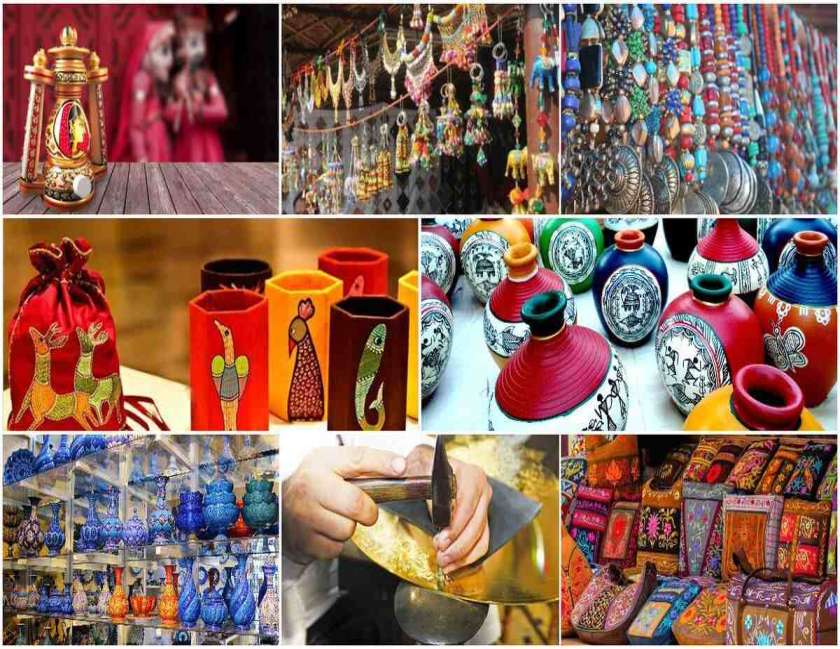
What makes Gujarat one of its kind is its affluent and scintillating tradition, that you can find nowhere else in the country. The long line of inherited artistic brilliance keeps the art of making handicrafts and textiles alive in this Indian state. On your handicraft tour in Gujarat, it’s highly unlikely that you’d come across two handicrafts that are alike in any respect, be it in terms of pattern, material, or proportion. The crafts of Gujarat are products of magic and charm, and the maker knows how to blend aesthetic allure and intricate detailing to make it unique. On your handicraft tour, you will learn that the major handicraft and textile designs of Gujarat include pottery, Zari, Bandhani, Patola, woodwork, beadwork, and silver jewelry. Also, Gujaratis love mirrors!
Trip Highlights
Day 1: Arrive in Ahmedabad
The city of Ahmedabad, founded in 1411, lies in the banks of river Sabarmati and is nicknamed as the Manchester of the East, owing to its similarities with the cotton textile center of Manchester. The city is popular for its architectural expertise, wooden mansions, Havelis, and serpentine lanes. Having secured a prominent position in the pages of history, revolving around stories of Mughal emperors and India’s freedom struggle, the city has undergone a series of transformations and is currently an urban metropolis.
Day 2: Ahmedabad Sightseeing
From the Swaminarayan Temple and museums to the 15th-century Jama Masjid, there is plenty to explore on your handicraft tour in the heritage city of Ahmedabad. For instance, the Calico Museum of Textiles built in 1949 is a specialized museum that features textiles as old as centuries, Mughal carpets, amulets, and weapons. In the Shreyas Folk Museum, you’d find a vast collection of costumes, masks, toys, weapons, and handicrafts.
Day 3: Ahmedabad to Vadodara (excursion to Pavagadh & Champaner)
After Ahmedabad, the next destination is Vadodara, from where you can easily access the renowned Pavagadh and Champaner.
Residing atop a hill, and home to Mahakali temple, Pavagadh is a religious spot that attracts a multitude of pilgrims all-year-round. The fortified temple has been around for a long time, having witnessed both the growth and downfall of Champaner. Known for the captivating Mata Kalika idol housed by its Garbhagruh, Pavagadh features a fort, which was built by the Solanki Rajputs. Visit the temple, either, on foot or in a cable car.
Next, at the base of the Pavagadh hill, you will come across Champaner, which was declared a UNESCO World Heritage Site for its 114 monuments, the most popular being Jama Masjid, with historical and archaeological significance. Established by King Vanraj Chavda, Champaner was later seized by Mahmud Begda, who named it as the capital of Mahmudabad and spent 23 years to redecorate and reconstruct the city.
Day 4: Vadodara - Lothal - Bhavnagar
Following Vadodara, the next place to tick off your itinerary is the city of Lothal, which presently features a massive ship dockyard and is an archaeological site belonging to the ancient Indus Valley Civilization, that was once popular for its coppersmiths' workshops, pottery, and arterial streets.
After Lothal, your next handicraft tour destination is Bhavnagar, a site of thriving commercialism and industrialization, noted for its spinning and weaving mills. Both history aficionados and book lovers will particularly dig this place for its oldest and classiest Barton Museum, Barton Library, and the Gandhian Institution. This fifth-largest city in the state of Gujarat, founded in 1723 is also known for its diamond cutting and polishing industry.
Day 5: Bhavnagar - Palitana - Diu
Spend your day in Palitana, a princely state, until it merged with an independent India in 1947. The place holds a significant place in the heart of every devout Jain, for the hill is believed to be the epitome of sanctity in Jainism, and to attain nirvana, a Jain must climb this mountain. History shows that Palitana was the capital of the Gohil Rajput clan and Kingdom of Rajpipla. Nowadays, tourists include Palitana in their handicraft tour plan to visit some of its 1300 millennia-old temples that showcase ornate carvings.
In the evening, you can leave for Diu.
Day 6: Free Day in Diu
Here are some of the places you can visit in Diu, which was a Portuguese colony centuries ago, and today a bustling spot with tourists who come here to explore its many monuments and architectural masterpieces.
St. Paul’s Church: Constructed around 1601-1610, St. Paul’s Church is a dedication to “Our Lady of Immaculate Conception.” Being one of the most famous attractions in Diu, hoards of visitors journey long distances to come here, especially to study the shell-like motifs and carvings that depict a few of the pages from the Holy Bible.
St. Thomas Church Museum: The pristine walls are reason enough for vagabonds to make an appearance in this church-cum-museum, built in 1598, but above all, it is the archaeological findings, the sublimity of art (life-size carving of Christ in the crypt), and the architectural wonder that magnetize people and make them want to linger.
Fort de Diu: The fort was built by the Portuguese, set against the backdrop of the magnificent views of the Nagoa beach. One can find a jetty that is still in use and a lighthouse that gives the perfect vantage point to witness the beauty of the surroundings. The entire place is dotted with cannonballs and the parapet features an assortment of cannons.
Day 7: Diu to Gondal
From Diu, start journeying to Gondal, for pastoral villages which are surrounding the region, waiting to be explored. Some of the attractions include:-
Riverside Palace: A European-style mansion initially known as the Yuvraj Bungalow, the Riverside Palace has eleven spacious and high-ceilinged bedrooms with furniture dating back to the colonial period, and an attached bath.
Royal Garages: For car lovers, the Royal Garage is the perfect go-to place that displays an extensive collection of vintage and classic cars, especially the ones belonging to the period between 1910 and 1955.
Naulakha Palace: Founded in the 1700s, Naulakha Palace is a walled complex that has undergone renovation several times overseen by successive rulers in the Darbargadh region. What blows the mind of every visitor is the stunning stone carvings on the facade and its ornate jharokha balconies.
Day 8: Gondal - Bhuj
The next place to visit on your handicraft tour is Bhuj.
The city of Bhuj, which was once a princely state, founded in 1510, derived its name from Bhujia Fortress. Bhuj is an ideal place for those on a handicraft tour to shop Kutchi handicrafts, which are found in abundance in the area, such as embroidery, heavy-silver jewellery, and wood carvings.
Day 9: Explore Tribal Villages Around Bhuj
Some of the tribal villages worth-exploring in the region of Bhuj include Hodka, Ludiya and Dhordo, which are known for their art and craft traditions, including leatherwork, embroidery, wood carving, and mud-houses.
Hodka: The artisan families who reside here are experts in producing colorful Banni embroidery and in chain-stitching mirrors.
Ludiya: While the men here work on decorative furniture, the womenfolk buzz over embroidery. You will be enamoured by the neatly built mud houses that feature mirror works and intricate designs.
Dhordo: Dhordo is well-known for its ingenious artistry that involves needle and thread.
Day 10: Explore Villages Near Bhuj
Spend your second day in Bhuj by visiting the following villages.
Nirona: The village is renowned for tuning fine copper bells and transforming blank wood with a splash of lacquer colors to produce brilliant paintings.
Bhujodi: Bhujodi is the major hub of textile handicrafts in Kutch and is home to skilled artists like tie-dye artists, weavers, and block-printers.
After these village visits, you can proceed in the direction of Mandvi, famous for its shipbuilding industry, located in the banks of the Rukmavati river.
Day 11: Including Mandvi
It’s time to bid adieu to Gujarat and take a flight to Mumbai from Bhuj.
Includes
Excludes
What is the best time to visit Gujarat for this tour?
The best time is October to March, when the weather is pleasant for sightseeing, temple visits, and village exploration (especially Kutch & Bhuj area).
How many days are required to complete this Gujarat handicraft tour?
This itinerary is designed for 10–11 days, covering major destinations like Ahmedabad, Vadodara, Bhavnagar, Diu, Gondal, and Bhuj along with tribal villages.
What are the key highlights of this tour?
Heritage sites in Ahmedabad
Pavagadh & Champaner (UNESCO Site)
Ancient Indus Valley site at Lothal
Jain temples at Palitana
Portuguese architecture in Diu
Royal palaces in Gondal
Kutchi handicrafts & tribal villages in Bhuj
Is this tour suitable for families and senior citizens?
Yes, it is suitable, but Palitana temple climb (3500+ steps) can be challenging for seniors. However, other destinations are comfortable with proper travel planning.
What kind of handicrafts can I buy during this tour?
You can explore:
Kutchi embroidery
Bandhani (tie-dye textiles)
Silver jewelry
Wood carving
Copper bell art (Nirona village)
How is the connectivity between these destinations?
Good road connectivity between cities
Nearest airports: Ahmedabad & Bhuj
Comfortable travel via private car or tempo traveler
Are there good accommodation options available?
Yes, from budget hotels to heritage stays:
Ahmedabad & Vadodara → Luxury & business hotels
Diu → Beach resorts
Bhuj → Heritage resorts & village stays
Is Diu worth including in this itinerary?
Yes, Diu offers:
Portuguese heritage
Beaches like Nagoa
Historic forts & churches
It adds a relaxing coastal experience to the tour.
What is special about Bhuj and Kutch region?
Bhuj is famous for:
Traditional handicrafts
Tribal culture
White Rann (seasonal)
Artisan villages like Hodka, Dhordo, Nirona
Are local guides available during village visits?
Yes, local guides/artisans are available in villages like:
Hodka
Ludiya
Bhujodi
They help you understand authentic craft techniques.
What should I pack for this tour?
Comfortable walking shoes
Light woolens (Nov–Feb)
Sunscreen & sunglasses
Traditional attire (optional for temple visits)
Is this itinerary customizable?
Yes, you can customize:
Duration (7–8 days short version)
Add Rann of Kutch festival
Include Gir National Park
How can I reach the starting point of the tour?
You can reach Ahmedabad via:
Flight (well-connected to major Indian cities)
Train
Road
Is this tour good for photography lovers?
Absolutely! You’ll get:
Heritage architecture
Colorful villages
Handicraft processes
Coastal landscapes in Diu
Booking your tour is simple and can be done online or offline. Just follow these steps:
Fill the Inquiry Form: Submit your details through our "Enquiry Now" form, or connect via WhatsApp chat or Live Chat or alternatively, you can email us your tour requirements.
Consult with Our Travel Expert: One of our travel experts will contact you, understand your requirements, and create the perfect package for you.
Confirm & Book: Once you are happy with the package, make an advance payment to confirm your booking.
Send us an email with the following details
Fill in the Booking Details: Provide the necessary information, including:
Make the Payment: To the company Bank account in the name of NTP Tourism Affairs Limited only
Child Policy
Cancellation Charges/ Refund Policy
Written Cancellation by email on the official email id info@ntpgroups.com or letter to the office address will be considered for the refunds and cancellation with the following cancellation (deduction) and refund policy.
Cancellation Policy
Refund Policy: All the refunds are settled in 30 days from the written cancellation received by our office
For More Booking, Cancellation & Refund Policies, please refer to the terms and conditions of NTP Tourism Affairs Limited.

6 Nights 7 Days tour
Lucknow, Naimisharanya, Prayagraj, Varanasi Ajodhya Package Tour
₹50,000/-
PER PERSON









03 Nights / 04 Days
Amarnath Yatra by Helicopter from Chennai, Bangalore, Delhi, Hyderabad, Kerala, Mumbai
₹35,000/-
PER PERSON


 +91-9810098099
 +91-9810098099


