
 Recent Posted News
 04 May 2026 (Monday)
Why Nepal Is Objecting To India-China Kailash Mansarovar Yatra Plan
05 May 2026 (Tuesday)
04 May 2026 (Monday)
Faster Delhi–Dehradun Route to Ease Access for Char Dham Pilgrims This Season

01 May 2026 (Friday)
Surge in Demand for Uttarakhand Pilgrimage; Heavy Crowd Expected This Summer

24 April 2026 (Friday)
Kailash Mansarovar yatra costs rise 20%, package now near Rs 3 lakh

05 November 2025 (Wednesday)
7 Winter Treks In The Himalayas That Promise Snow And Stunning Views

03 October 2025 (Friday)
Chief Minister Chandrababu Naidu's Free Tirupati Balaji Darshan Scheme* for *Senior Citizens


29 July 2025 (Tuesday)
Flood Without Rain in Nepal Raises Concerns About Glacial Lake Outbursts

29 July 2025 (Tuesday)
Flash flood sweeps Nepal-China bridge and vehicles in Rasuwa; search operation underway
 07 May 2026 (Thursday)
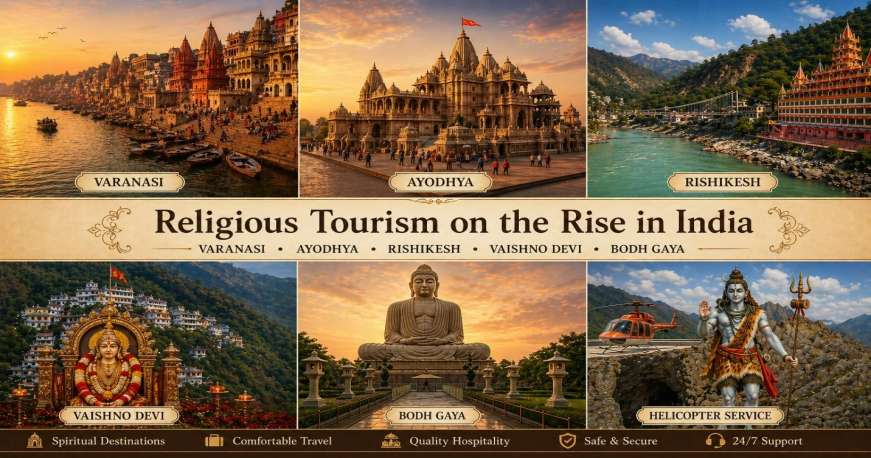
Something has shifted in the way people travel today. It’s no longer just about ticking destinations off a list. Increasingly, journeys are becoming personal. More intentional. And in India, that shift is showing up clearly in one space, religious tourism, which is slowly starting to dominate the travel landscape.
The growth of religious tourism in India is not subtle. It’s visible, measurable, and accelerating every year. It is hard to believe that a few years back, this was a niche segment of India's travel industry and has now become its backbone, redefining how millions of people choose to explore the country.
The pandemic changed more than just travel restrictions. It changed priorities. The crisis forced people to change their perspective and find experiences that offer peace and clarity.
People believe that spiritual journeys are the best way to escape the boring routine of everyday life and connect with something that helps them discover themselves. Experiences like going to temples or doing rituals by the river give one a sense of peace that modern life is not able to offer anymore.
This rise in spiritual tourism is not happening by itself. The government of India is actively making investments and revising policies to support this segment of the travel industry. Their main focus is not to make it easier for pilgrims to reach their preferred destination with ease, while enjoying a comfortable travelling experience.
Spiritual Tourism Meets Wellness and Self-Discovery
People don't embark on religious tours just for rituals. They also want to experience a journey that fulfils their spiritual beliefs, along with wellness and personal growth objectives. This change has been seen not just among the modern tourists but also among traditional pilgrims.
India is home to thousands of spiritual sites that cater to people from different religions. But there are a few destinations that attract millions of tourists every year. They are economic drivers and become deeply personal spaces for the people who visit them.
Varanasi is often called one of the oldest cities in the world, where people still live today. Every night, the ghats along the Ganges come to life with rituals that have been practised for years. The city is a good example of the size and depth of India's spiritual tourism, with more than 8 crore visitors in 2023.
Ayodhya has grown in an amazing way in the last few years, especially since the Ram Mandir project began. The city is expected to draw in lakhs of visitors every month, making it one of the fastest-growing religious tourism centres in the country.
Rishikesh is one of the few places that can combine spirituality and health. It is famous around the world for yoga and meditation, and flocks of international tourists visit this place every year. The town is a modern example of spiritual tourism, where ancient traditions meet new ways of living.
Vaishno Devi is still one of the most popular pilgrimage sites in India. It is located in the hills of Jammu. With about 10 million visitors each year, it attracts families and solo travellers looking for blessings through a journey that is both physical and spiritual.
This place is one of the most significant places for people who follow Buddhism. This is because Gautam Buddha attained enlightenment at this very place. It draws in people from all over the world making it the most important spiritual place not just in India but in the world.
The popularity of tourism at spiritual and religious places impacts local people and the economy as a whole. It uplifts livelihoods and improves infrastructure while supporting regional development.
The trajectory in which spiritual travelling is going forward is clear. It is quite evident that this segment is not going to slow down but keep on evolving and become more structured. The government's effort to make destinations like Rishikesh, Bodh Gaya and others more accessible to travellers will keep supporting the growth of religious tourism.
And taking into consideration the technological advancements and continuous investments, booking tickets and the concept of virtual darshan will keep shaping the future. At the same time, the essence of these journeys, the search for meaning, will remain unchanged.
India has always been a land of spiritual exploration. What’s changing now is how that exploration is being experienced. With 60% of domestic travel already rooted in faith, religious tourism is no longer just a segment. It is the centre of India’s travel story.
And for many, it’s not just about where they go. It’s about what they find along the way.
This summer is set to witness one of the highest pilgrim turnouts in recent years. Waiting longer might only make the journey more difficult to arrange.
Get in touch with NTP Tourism now and let the experts craft a deeply meaningful travel experience for you.
Call / WhatsApp: +91-9810098099
Email: mailto:sales@ntpgroups.com
NTP Tourism Affairs Ltd. - Trusted partners for your most sacred journey.


 +91-9810098099
 +91-9810098099


